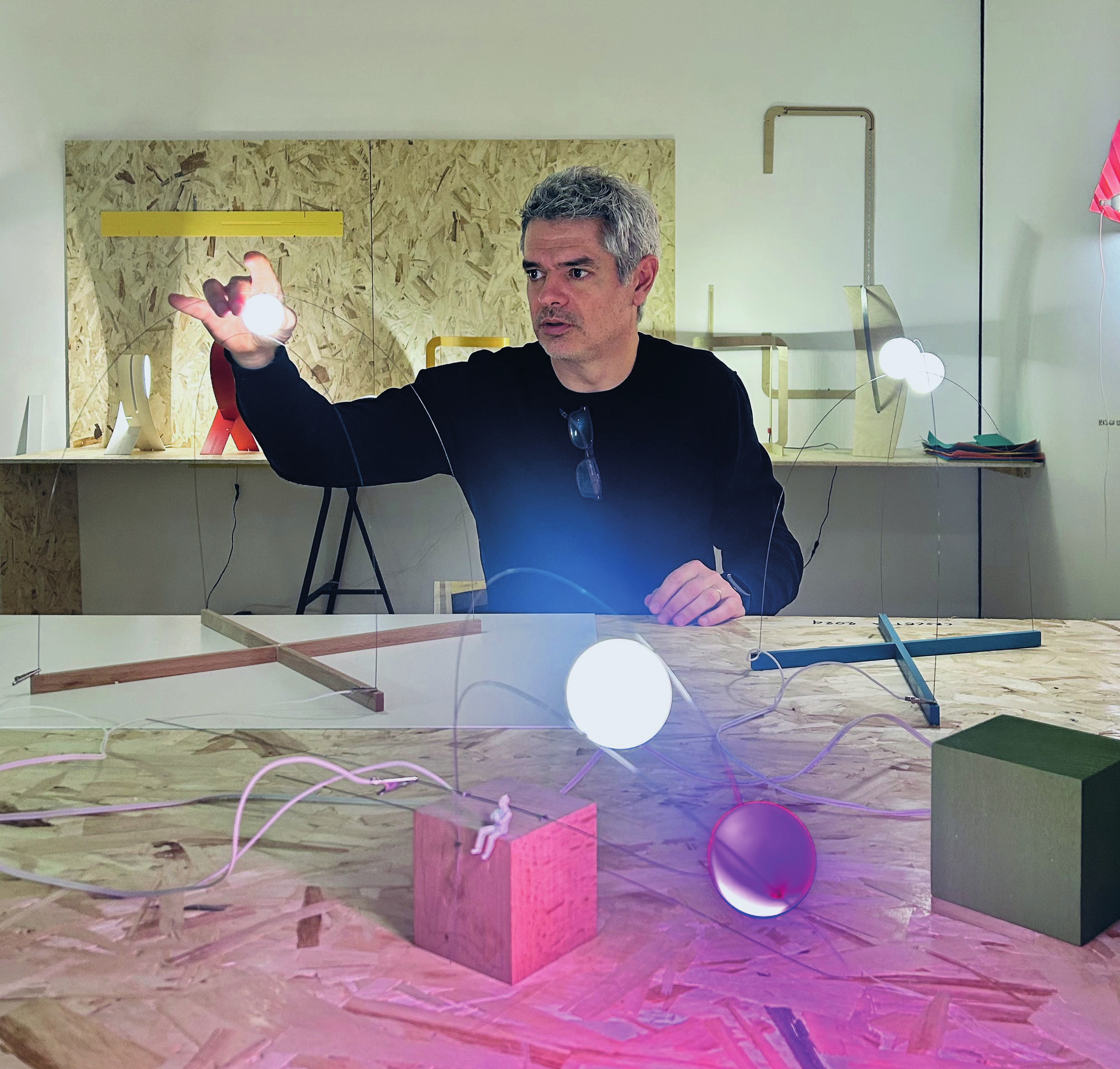
Andrea Cavani (Modena, 1974) carries out professional and research activities in the fields of architecture, exhibition design, and product design.
He studied architecture in Mendrisio and Ferrara, where he graduated under Peter Zumthor.
He further explored the relationship between form and structure in 20th-century structural architecture, earning a PhD from the University of Bologna with a dissertation on the work of Pier Luigi Nervi.
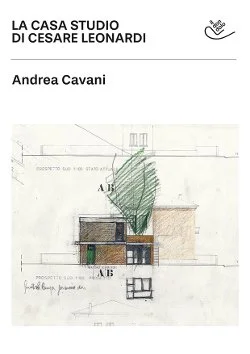
Since 2008, he has been the co-founder and curator of the Archivio Architetto Cesare Leonardi - an institution dedicated to the preservation and dissemination of Cesare Leonardi's work, based in the architect's home-studio at the Villaggio Artigiano in Modena Ovest.
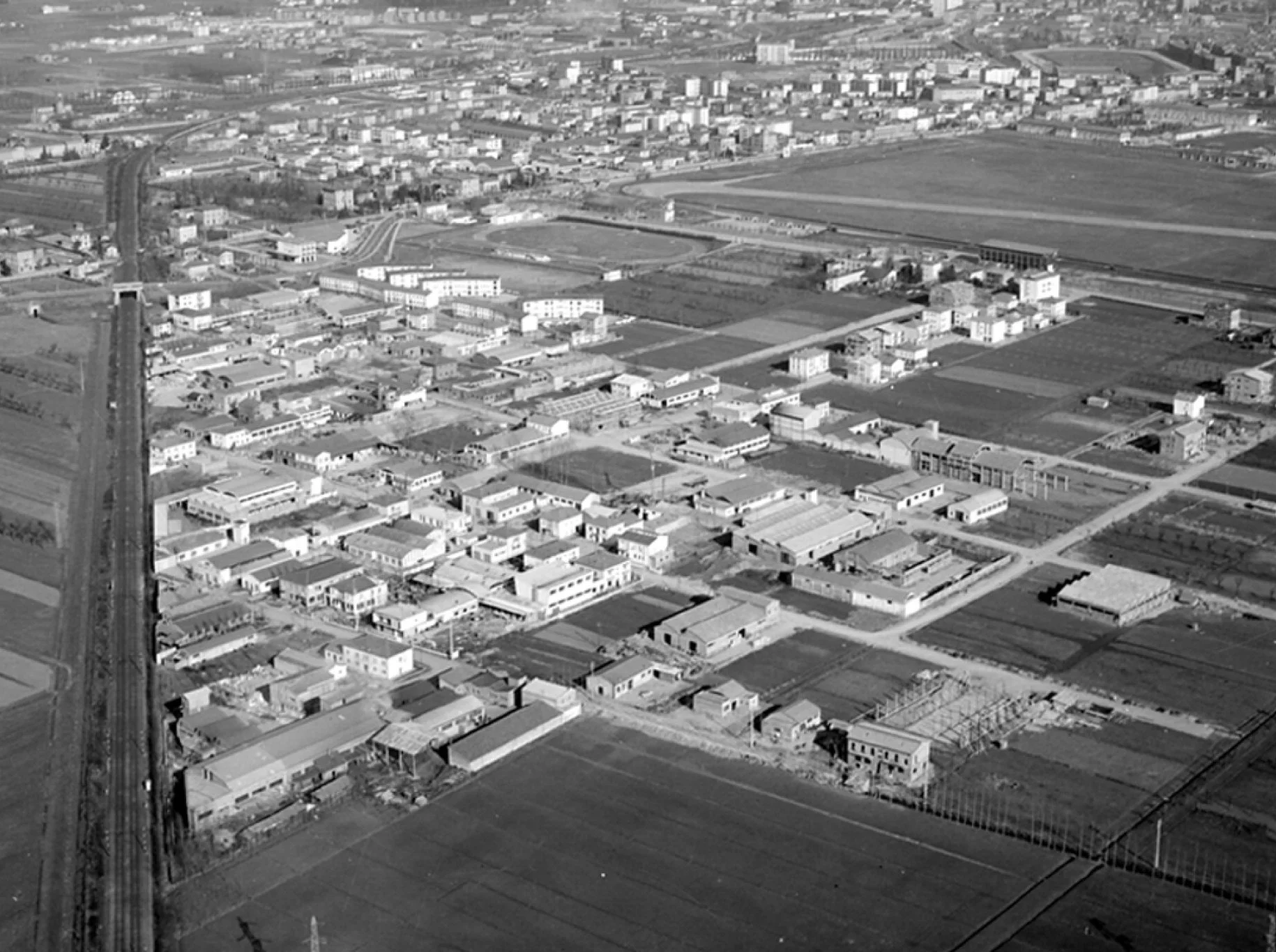
Andrea Cavani develops his research, Luce Flessibile, within the Villaggio Artigiano Modena Ovest, in continuity with the work of Cesare Leonardi, with whom he worked closely and through whom he approached design. It is in this same context that the Leonardi House-Archive is located, the place where the architect lived and worked.
Founded in 1953, the Villaggio Artigiano is the first planned artisan district in Italy: a place that represented a model of economic and social development in the post-war period and that still maintains a strong productive and cultural identity today. Workshops, craft studios, and associative spaces coexist here, fostering an environment in which knowledge and practices are passed down across generations.
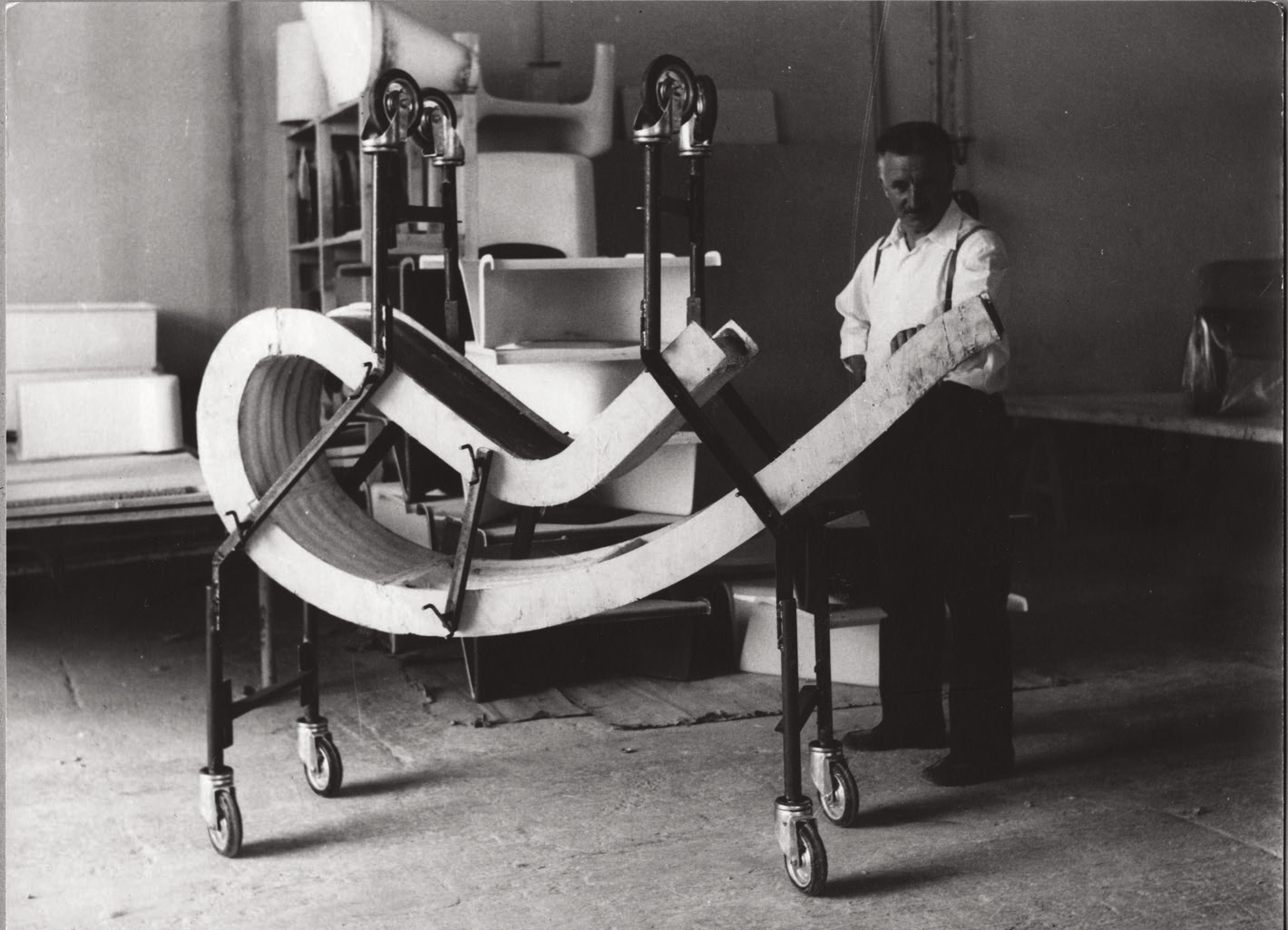
Within this context, at the end of the 1960s, prototypes of some of the most significant works by Cesare Leonardi and Franca Stagi were produced, including the Dondolo and Nastro chairs, the result of a research process that marked a fundamental moment in Italian design history.
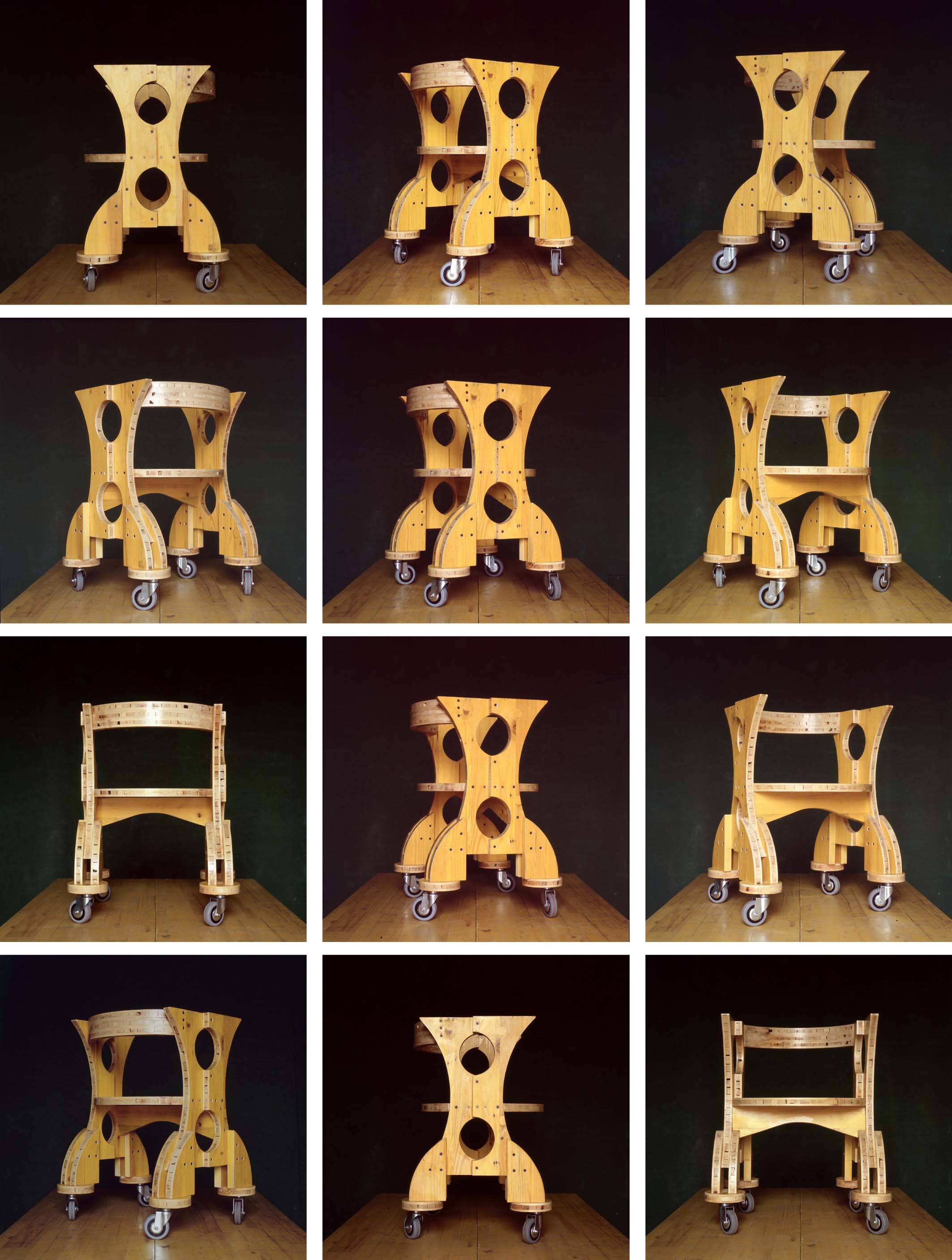
It is also here, in the house-studio, that Cesare Leonardi developed the Solidi: a design system that reduces design to its essential condition, establishing a direct relationship between material, construction rule, and form.
Starting from a single standard 150 × 50 cm sheet of “yellow” construction wood, along with its multiples, and following a zero-waste principle, the project becomes a design process that generates hundreds of combinable and transformable elements. The Solidi constitute a method and, as such, a form of teaching that has informed the research behind Luce Flessibile: a way of thinking about and making design that goes to the very root of what designing means.